Dubai has an extraordinary breadth of flatbreads — from Indian roti and Yemeni lahoh to Iranian sangak and Ethiopian injera. But Canjeero, the spongy Somali fermented flatbread, remains one of the most overlooked. That's a genuine shame, because eaten fresh off a hot griddle at a Deira breakfast spot with a drizzle of honey and a spoonful of ghee, it's one of the most comforting things you can eat in this city.
What Exactly Is Canjeero?
Canjeero (also written Anjero, and sometimes called Lahoh in Yemen where a similar bread exists) is a thin, spongy flatbread made from a fermented batter of sorghum or wheat flour, water, and yeast. The fermentation gives it a mild tang — less intense than Ethiopian injera — and creates the characteristic bubble-textured surface that traps honey, ghee, and stew with equal enthusiasm.
- Diameter: 25–35cm (think large pancake size)
- Thickness: 3–5mm — thin but spongy
- Taste: Mildly sour, slightly earthy, neutral enough to complement sweet and savoury
- Texture: Spongy, porous, slightly chewy at the edges
- Cooked on: A flat circular pan (called a laxoox pan) — one side only
- Closely related to: Ethiopian injera, Yemeni lahoh
How to Eat Canjeero
There are three canonical ways to eat Canjeero in a Somali context, and Dubai's Somali restaurants honour all three:
The Breakfast Canjeero — with Honey and Ghee
The classic morning preparation. A warm Canjeero arrives folded or flat, with a small bowl of honey and melted ghee on the side. Tear, dip, eat. This is the Somali equivalent of pancakes with maple syrup — impossibly simple, impossibly good.
Canjeero with Maraq (Stew)
The savoury lunch and dinner version. Canjeero is served alongside Maraq Hilib (goat broth) or Hilib Ari (roasted goat). Tear the flatbread and use it to scoop up the stew, much like you'd use injera for Ethiopian wat.
Canjeero with Suugo (Tomato Sauce)
A Somali-Italian hybrid born from Italian colonialism in southern Somalia. Suugo is a rich tomato-based pasta sauce adapted by Somalis over generations. The combination sounds unlikely; it tastes extraordinary. Not widely available in Dubai, but ask at Somali restaurants and some will make it.

Where to Find Canjeero in Dubai
Canjeero is not available at many restaurants beyond the small cluster of authentic Somali spots in Deira. Here are the best places to find it:
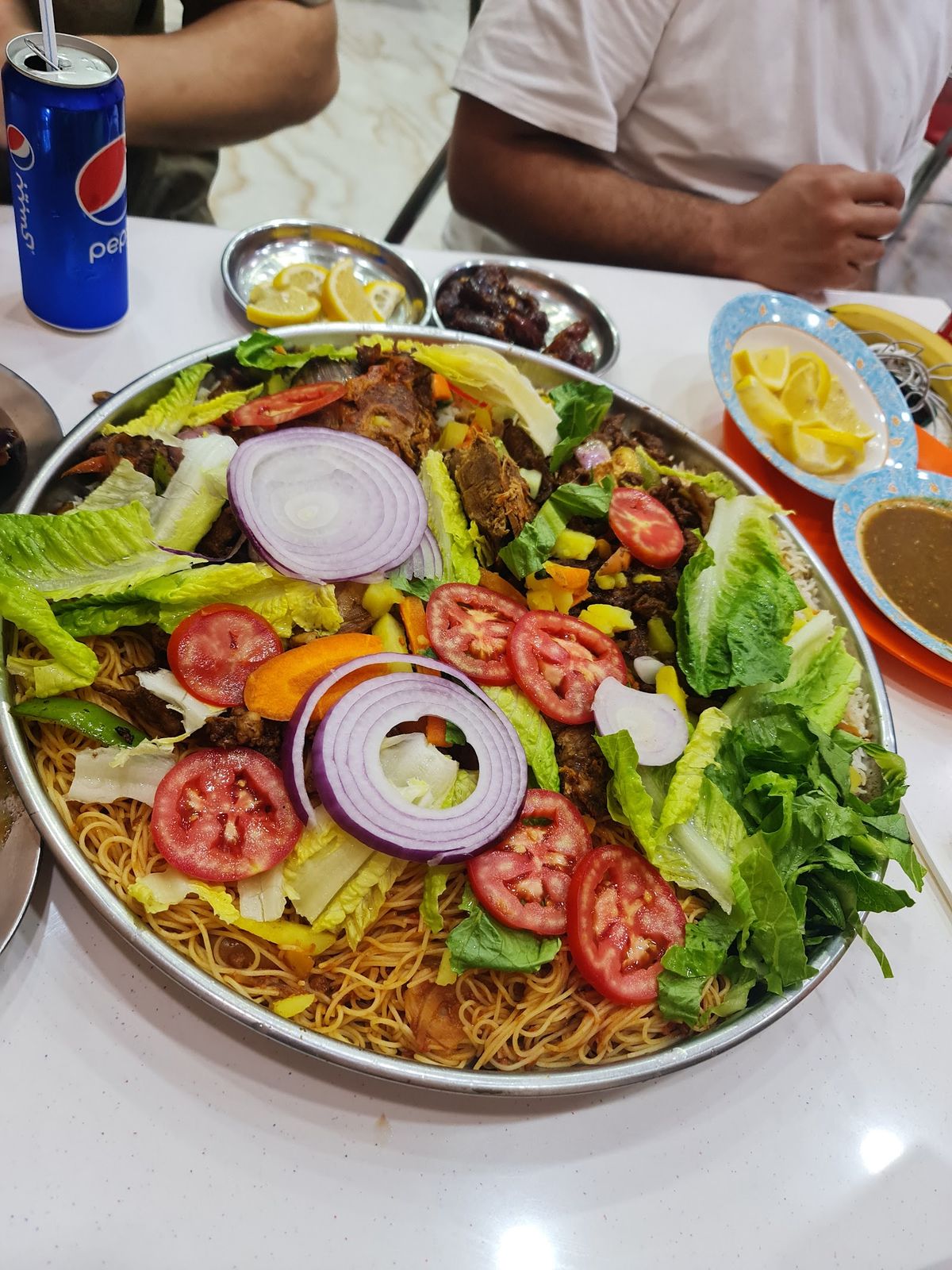
Al Karmel Somali Restaurant
The best Canjeero in Dubai. Served in the morning with honey, ghee, and sweet tea (Shaah — Somali spiced tea with cardamom). The flatbread here is made fresh and has the perfect spongy texture. Come between 7–10am for the full breakfast experience. This is Old Dubai food culture at its finest.
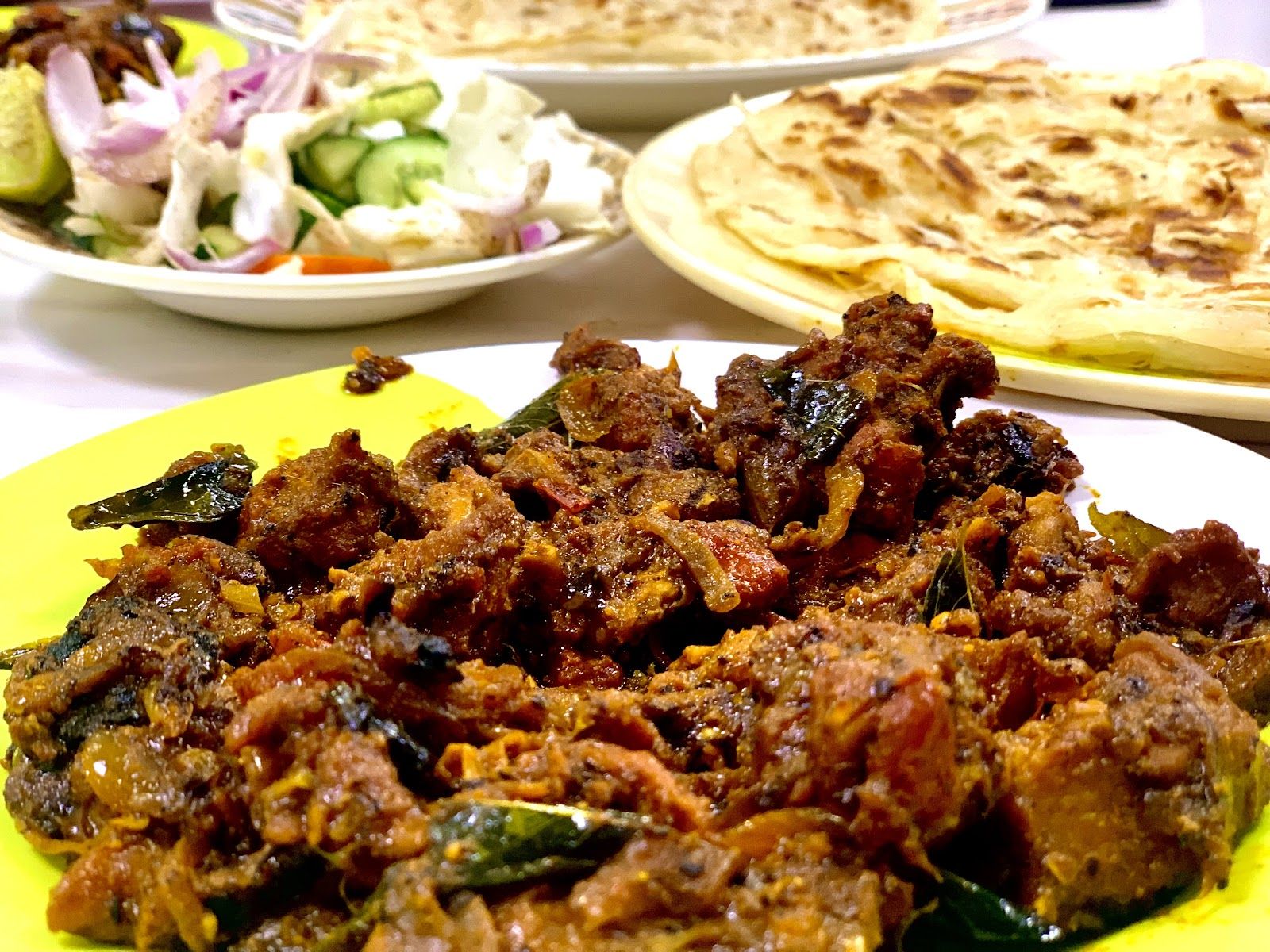
Nasib Restaurant
Nasib is where Canjeero gets the savoury treatment. The evening menu pairs Canjeero with Maraq Hilib (goat broth soup) as a starter — tear, dip, absorb the rich spiced broth. It's also available for breakfast with the standard honey and ghee treatment, but the stew pairing is the real reason to visit.
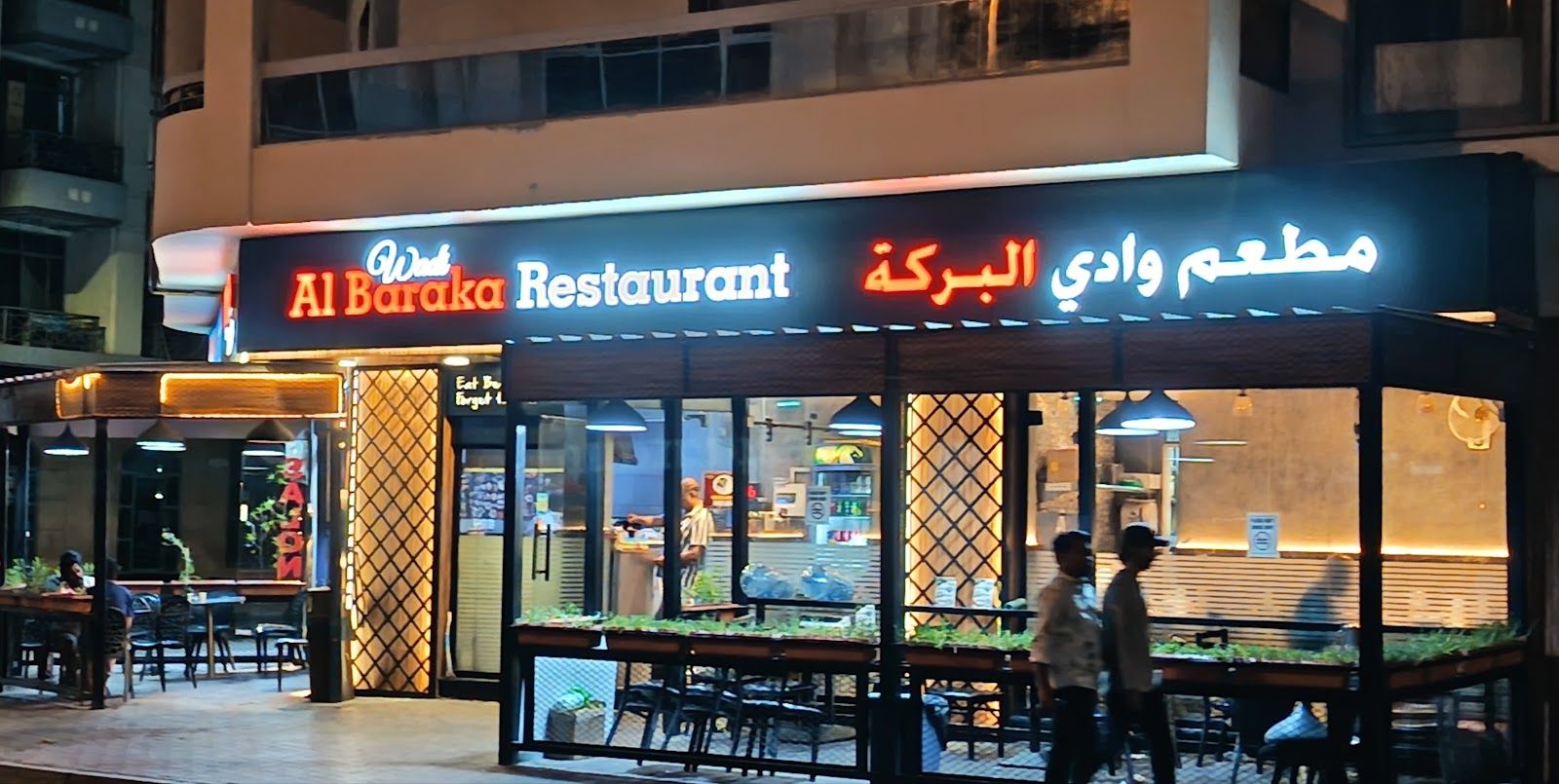
Baraka East African Kitchen
Baraka's Canjeero is slightly more accessible for first-timers — the environment is more polished, the menus are in English, and the staff are accustomed to explaining dishes. Great introduction to the breakfast Canjeero experience without the navigation challenge of finding a hidden Deira lane.
Canjeero vs. Injera: What's the Difference?
The most common question about Canjeero is how it differs from Ethiopian injera. Both are fermented flatbreads made from grain flour, but there are real differences:
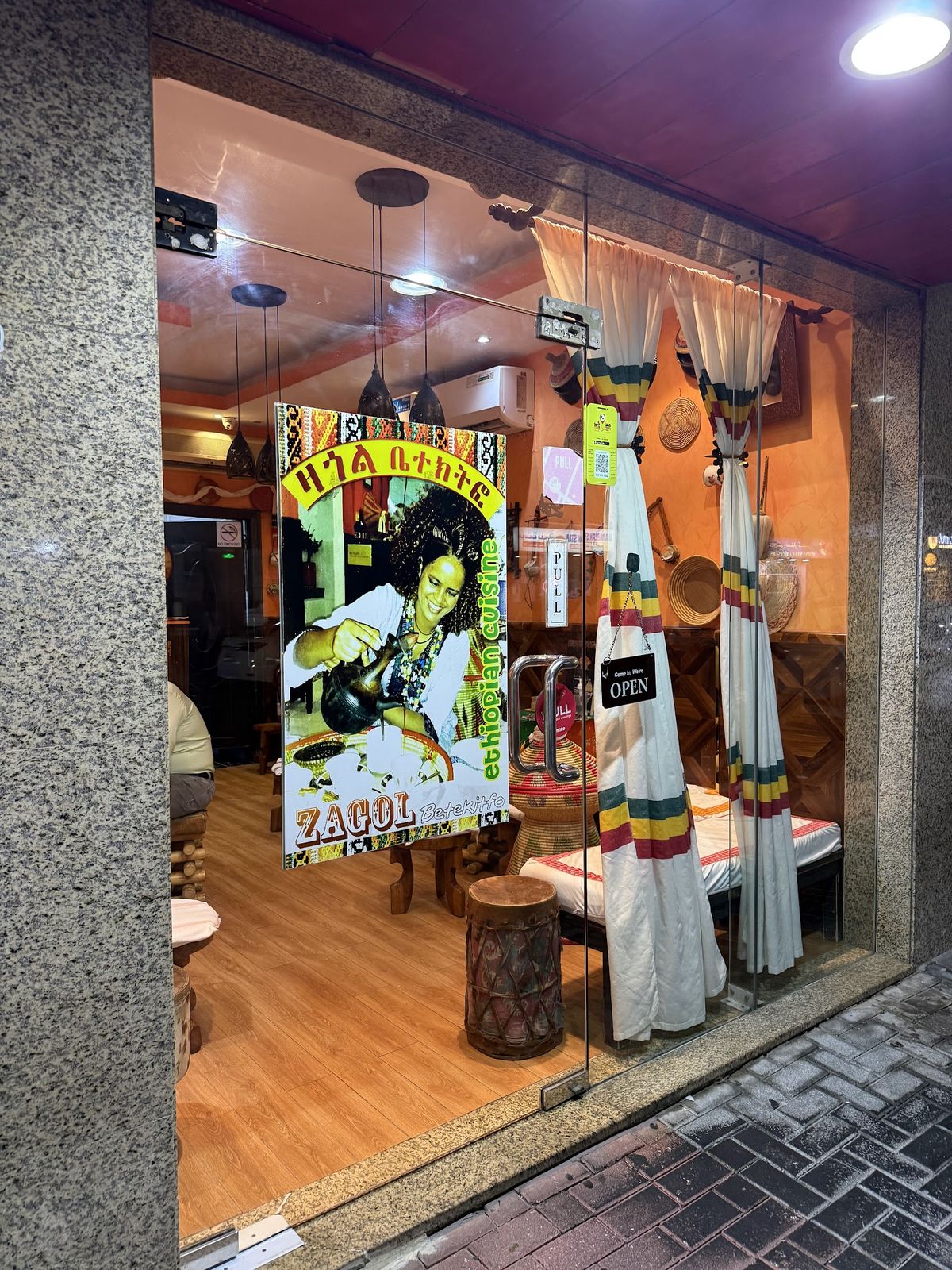
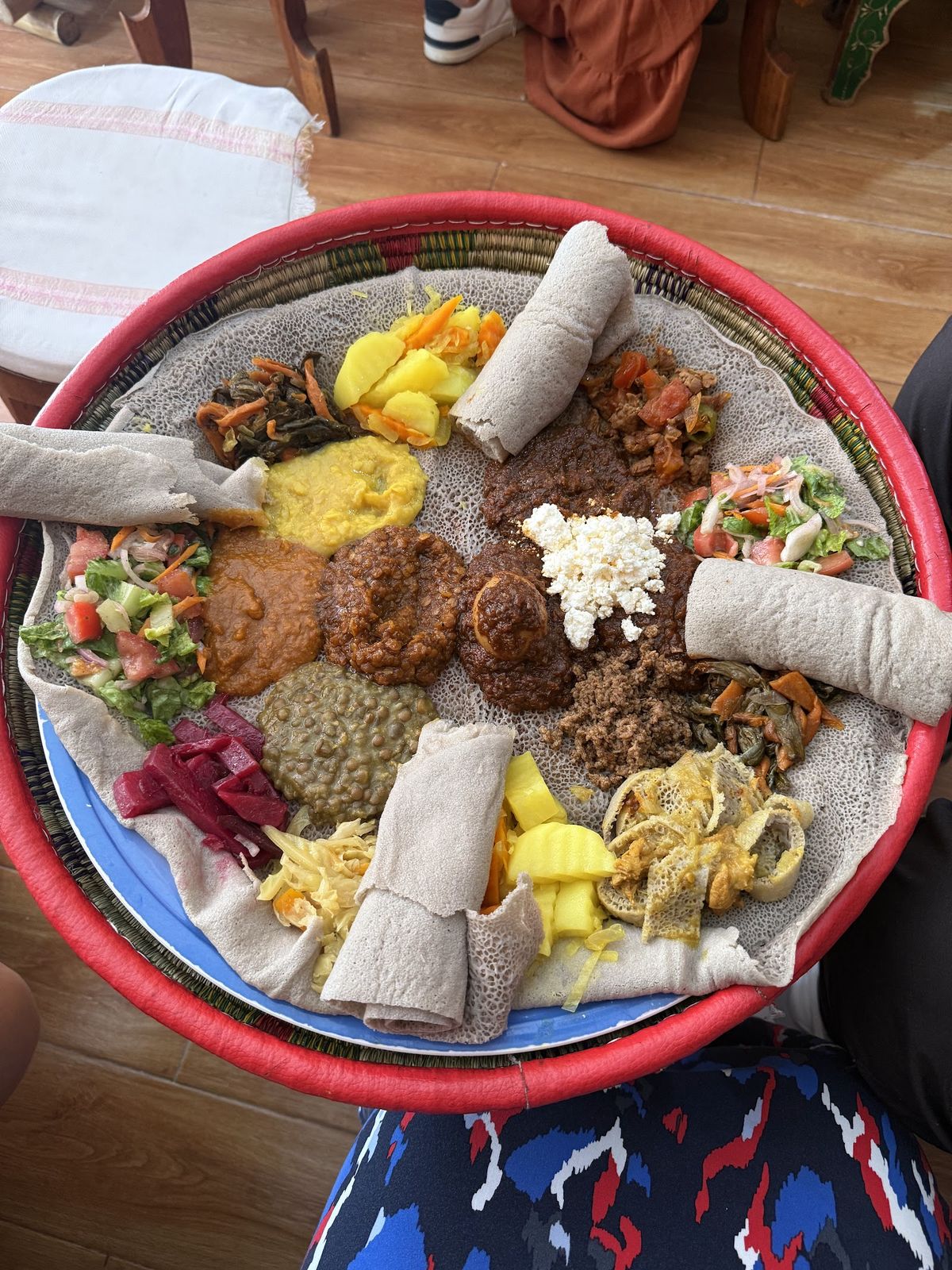
Canjeero uses wheat or sorghum flour (lighter in colour and flavour than injera's teff), has a shorter fermentation time, and is smaller in diameter. Crucially, it's eaten both sweet and savoury — whereas injera is almost exclusively the base for savoury stews. The texture is spongier and less tangy, making it more approachable for those unfamiliar with fermented flatbreads.
Tips for Eating Canjeero in Dubai
- Go at breakfast (7–10am) for the best freshly made Canjeero experience
- Order Shaah (Somali spiced tea) alongside — cardamom and clove flavours pair perfectly
- Don't skip the honey — the sweetness against the mild sour is the whole point
- It's fine to eat Canjeero with your hands — that's the traditional way
- Ask if they have fresh Canjeero or pre-made — fresh is noticeably better
- Deira Somali restaurants open early — many serve from 6:30am for the breakfast crowd
The Broader Somali Breakfast Experience
In Dubai's Somali restaurants, Canjeero is usually part of a broader breakfast spread. A full Somali breakfast (around AED 25–35) typically includes Canjeero with honey and ghee, Shaah spiced tea, fresh banana, and sometimes a small bowl of Hilib Suugo (meat sauce). It's a communal affair — food ordered and shared across the table, with tea refills arriving automatically. It's the kind of breakfast that makes you feel genuinely looked after.
Related Somali Food Guides
Somali Food in Dubai: Complete Guide
Read Guide →
Best Somali Restaurants in Dubai
Read Guide →