Kebab is not just a dish in Persian cuisine — it is a philosophy. Iranian cooks approach the kebab with the same precision and pride that French chefs bring to a sauce. The quality of the meat, the marinade, the cut of the skewer, the temperature of the charcoal, the timing of the flame — every variable is considered and controlled. In Dubai, where a large Iranian expat community has driven the standard exceptionally high, you can eat some of the finest Persian kebab in the world.
Here is your complete guide to every style of Persian kebab you'll encounter in Dubai, with the best restaurant for each, and what to expect when you order.

The Persian grill: charcoal, skewers, saffron and patience — the foundation of Iranian culinary culture
The Six Essential Persian Kebab Styles
Koobideh
كوبيده — "pounded/minced"
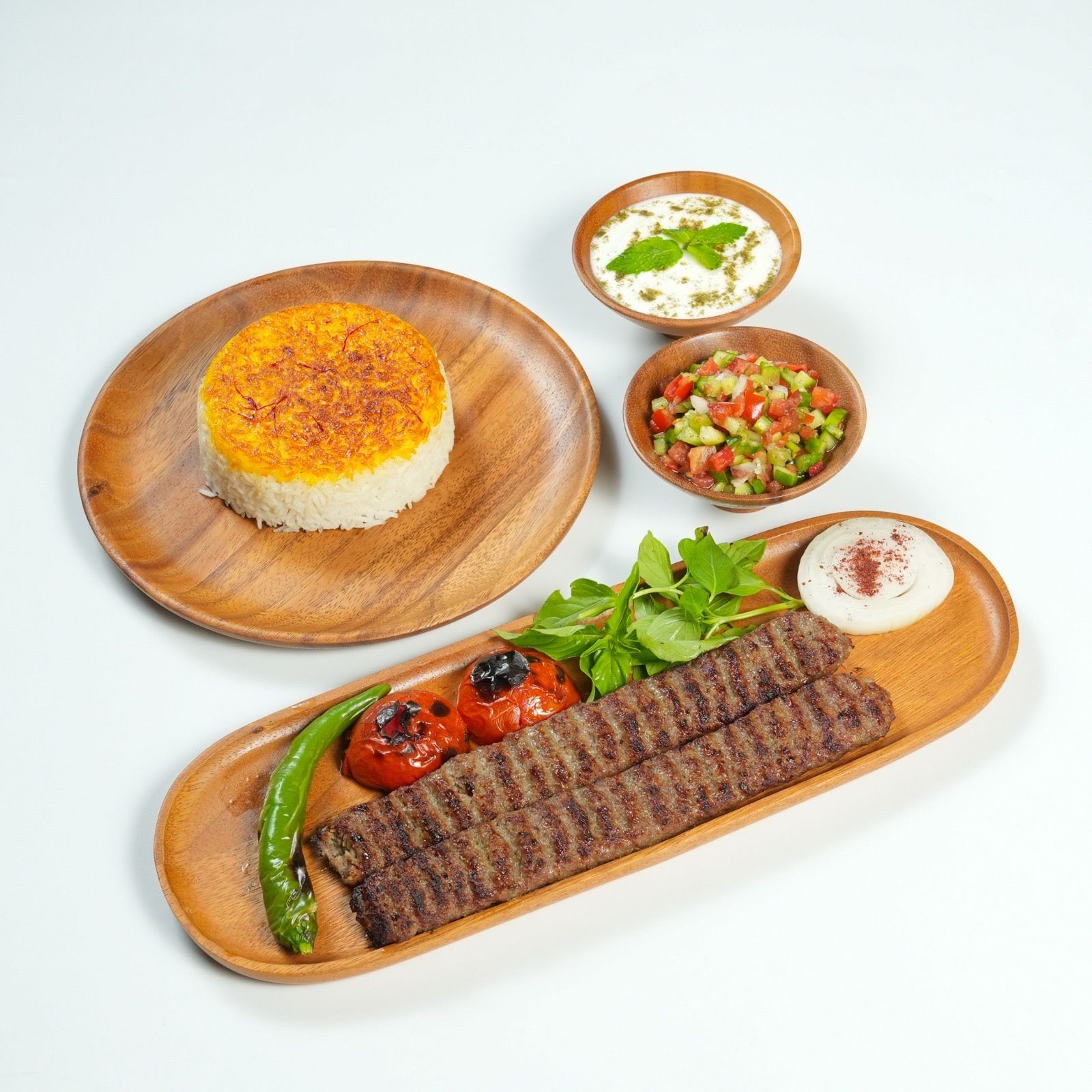
MOST POPULARThe people's kebab. Ground lamb (or a lamb/beef mix) is combined with grated onion, salt and occasionally turmeric, then pressed onto a wide flat skewer and grilled over charcoal. A perfect koobideh has a slightly crispy exterior with a juice-soaked interior, seasoned throughout with the gentle sweetness of raw onion.
The key technical challenge: the meat must adhere perfectly to the skewer. Too wet and it falls off; too dry and it's dense. Dubai's best cooks train for years to get this right consistently.

Barg
برگ — "leaf" (for the thin cut)
THE FINESTThe aristocrat of Persian kebabs. Thinly sliced lamb fillet — sometimes eye of loin — is marinated for hours in saffron, fresh lemon juice, grated onion, salt and black pepper, then laid over a wide flat skewer and grilled quickly over high heat. The result is elegant, tender and powerfully aromatic with saffron.
Barg is the most expensive and most impressive kebab style. When restaurants advertise "chelo barg" on their premium menu, this is what they mean. The saffron colour on the meat should be deep gold, not pale — a tell of how much real saffron went in.
Joojeh
جوجه — "baby chicken"
CHICKEN CLASSICThe chicken kebab of Persian cuisine — and nothing like the generic chicken skewer you've had elsewhere. Joojeh uses young chicken (traditionally a whole bird, now usually breast or thigh pieces) marinated in saffron, lemon juice, onion and sometimes yoghurt, then grilled on skewers. The saffron-lemon combination turns the skin a vivid golden-orange.
Joojeh is the most popular choice for people trying Persian kebab for the first time — approachable but immediately revelatory. The saffron here is not background noise; it's the point of the dish.
Soltani
سلطانی — "the sultan's" (mixed royal platter)
THE COMPLETE MEALNamed for a sultan's portion — soltani combines one skewer of koobideh with one skewer of barg on a single platter of saffron rice. It is the most complete way to experience Persian kebab in one meal: the juicy, intense ground lamb alongside the elegant, saffron-fragrant fillet. When in doubt about what to order, order this.
The soltani platter at Farsi Restaurant (AED 110) feeds two people comfortably and is one of the best-value meals in all of New Dubai. At Shabestan, the soltani (AED 200) reaches a different altitude of quality entirely.
Shishlik
شیشلیک — from Turkish "şiş" (skewer)
LAMB CHOPSThe showstopper of the Persian grill. Bone-in lamb ribs (chops) marinated in saffron, lemon and onion, then grilled over charcoal. The bone adds flavour and the marbling of rib meat makes this richer than barg. A proper shishlik arrives with three or four chops fanned across the rice, the bones charred at the tips.
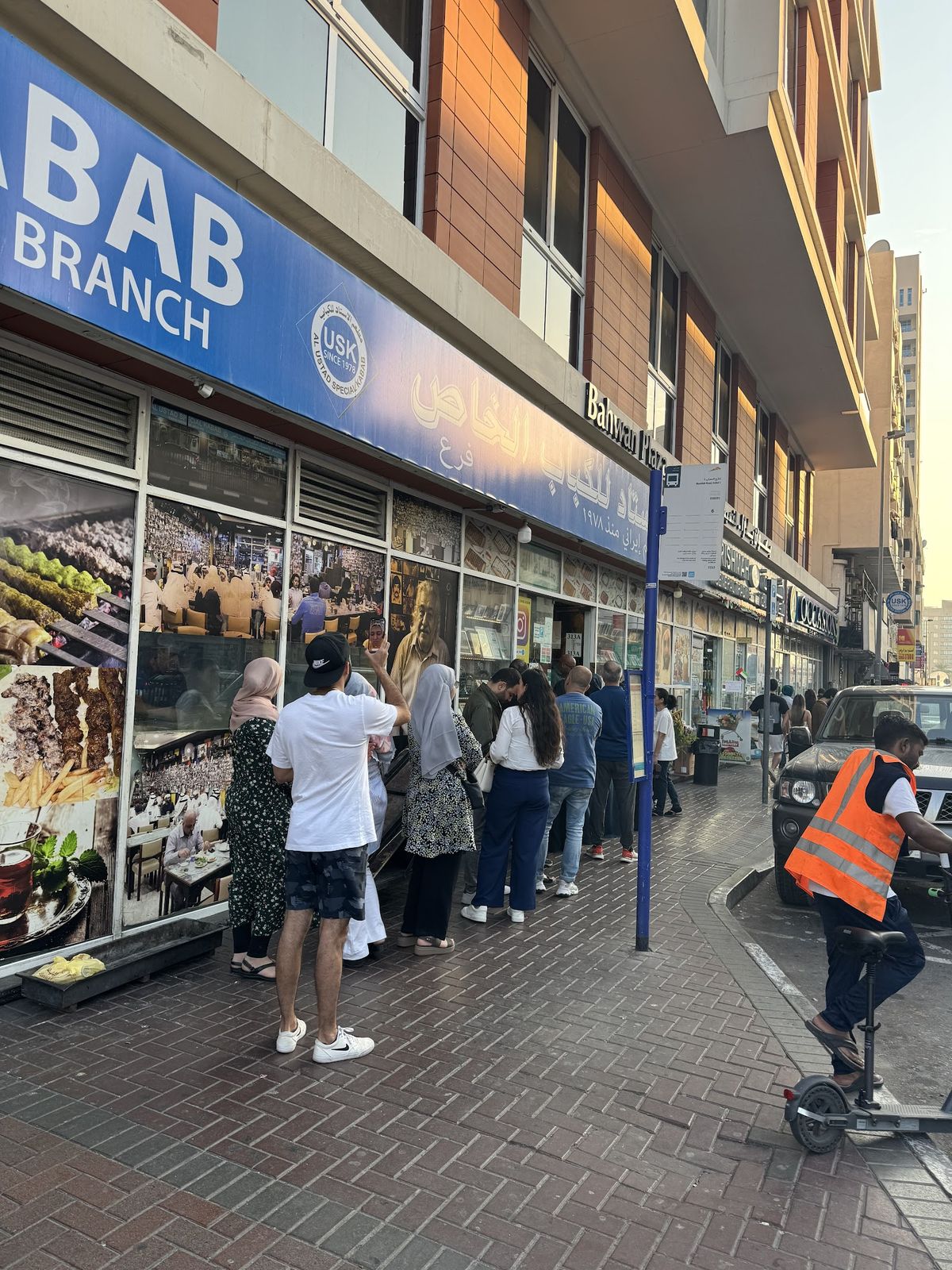
The best shishlik in Dubai is at Shabestan — the lamb chops (AED 185) arrive at the table with a theatrical flair, the saffron stain vivid against the white rice. At Al Ustad, the lamb chops (AED 95) are extraordinary value.
Chelo Kebab
چلو کباب — "rice kebab"
THE NATIONAL DISHChelo kebab is not a specific kebab style — it is any kebab served with chelo rice. "Chelo" is the method: aged basmati par-cooked and then steamed to produce fluffy individual grains, with a golden crispy crust (tahdig) at the bottom. A proper chelo arrives buttered, topped with saffron, beside a raw egg yolk you mix in yourself, and a grilled tomato.
When Persian restaurants say "chelo kebab" on their menu without further description, they almost always mean koobideh on rice. The egg yolk is not optional — mix it into the saffron butter and rice before eating. This is how it is done.
The charcoal grill is everything in Persian cooking — the smoke is part of the flavour
How to Order Persian Kebab Like a Local
🎯 The Local's Ordering Guide
Persian Kebab Price Comparison: Dubai 2025
| Kebab Style | Al Ustad | Farsi Restaurant | Iran Zamin | Shabestan |
|---|---|---|---|---|
| Koobideh (2 skewers) | AED 55 | AED 70 | AED 75 | AED 110 |
| Barg (fillet) | AED 85 | AED 115 | AED 125 | AED 160 |
| Joojeh (chicken) | AED 65 | AED 85 | AED 80 | AED 145 |
| Soltani (mixed) | AED 80 | AED 110 | AED 120 | AED 200 |
| Shishlik (lamb chops) | AED 95 | AED 120 | AED 130 | AED 185 |

Persian Kebab FAQs
What is the difference between koobideh and barg?
Koobideh is made from minced/ground lamb mixed with grated onion, pressed onto a flat skewer and grilled. Barg is thinly-sliced lamb fillet marinated in saffron, lemon and onion. Koobideh is juicier and more intense; barg is more elegant and saffron-forward. Both are essential.
What is chelo kebab?
Chelo kebab means kebab on rice — 'chelo' is the cooked basmati. The rice is always buttered and topped with saffron. You receive a raw egg yolk and a grilled tomato with it — mix both into the rice. This is Iran's national dish.
Where is the best Persian kebab in Dubai?
For the finest experience: Shabestan at Radisson Blu Deira. For the most iconic value: Al Ustad Special Kebab in Deira (since 1978). For everyday convenience: Farsi Restaurant in JLT (open till midnight).
Is Persian kebab always lamb?
Traditionally yes, though joojeh is chicken. In Dubai, some restaurants offer beef koobideh as an alternative, but purists consider lamb the correct meat for both koobideh and barg. If the menu doesn't specify, assume lamb.
For more on the broader Persian food scene, read our complete Persian food guide, or see our full ranking of Dubai's best Persian restaurants.