
Dubai's street food scene is one of the world's great multicultural eating experiences. In a city of 200+ nationalities, where a Deira alley can take you from a Pakistani dhaba to a Filipino BBQ stand to an Iranian kebab house to an Emirati luqaimat cart in the space of five minutes, the street food is a living record of who built this city and what they brought with them.
The best street food in Dubai is not in tourist areas. It's in Satwa, Karama, Deira, and the old souks — the neighbourhoods where the city's working population lives and eats. We've eaten through all of it. Here are the spots that are genuinely worth the trip.
The Best Street Food Spots in Dubai

Al Mallah — Al Diyafah Street, Satwa
Al Mallah is a Dubai institution so deeply embedded in the city's food culture that its absence would leave a hole in the social fabric of Satwa. Open for nearly 40 years, it serves the neighbourhood's extraordinary mix of Lebanese, South Asian, Emirati, and Western residents from a modest storefront on Al Diyafah Street — and the queue at 11pm on a Thursday is as long as it was in 1990.
The chicken shawarma (AED 17) is Dubai's benchmark: thin slices of rotisserie chicken marinated in seven spices, sliced to order, wrapped with toum (the magnificent, almost aggressive Lebanese garlic sauce), bright yellow pickled turnips, and fresh parsley in warm flatbread. The falafel wrap (AED 13) is equally essential — properly crispy and fresh from the oil every few minutes. Order fresh mango juice (AED 22) alongside and eat standing at the outdoor tables while Satwa moves around you. This is one of Dubai's genuinely irreplaceable experiences.
Must-Order
Best Time to Visit
Late night (11pm–2am) for atmosphere. Early morning for fresh manakish. Weekday lunch for no queue.
Getting There
Al Diyafah Street, Satwa. Street parking. Order at the counter — no reservations, no frills, just great food.
Al Ustad Special Kebab — open since 1978, listed by World's 50 Best Discovery, serving Dubai's greatest Persian kebabs to generations of regulars.

Al Ustad Special Kebab — Near Al Mussallah, Deira
Al Ustad Special Kebab has been operating since 1978 — founded by Haji Mohammed Ali Ansari, an Iranian expat who came to Dubai before the oil boom and gave the city one of its most enduring culinary gifts. It has since been listed by the World's 50 Best Discovery programme and been visited by royalty, celebrities, and chefs from around the world. The setting is famously no-frills: plastic chairs, walls covered in photos of famous visitors, the smell of charcoal and saffron drifting into the street.
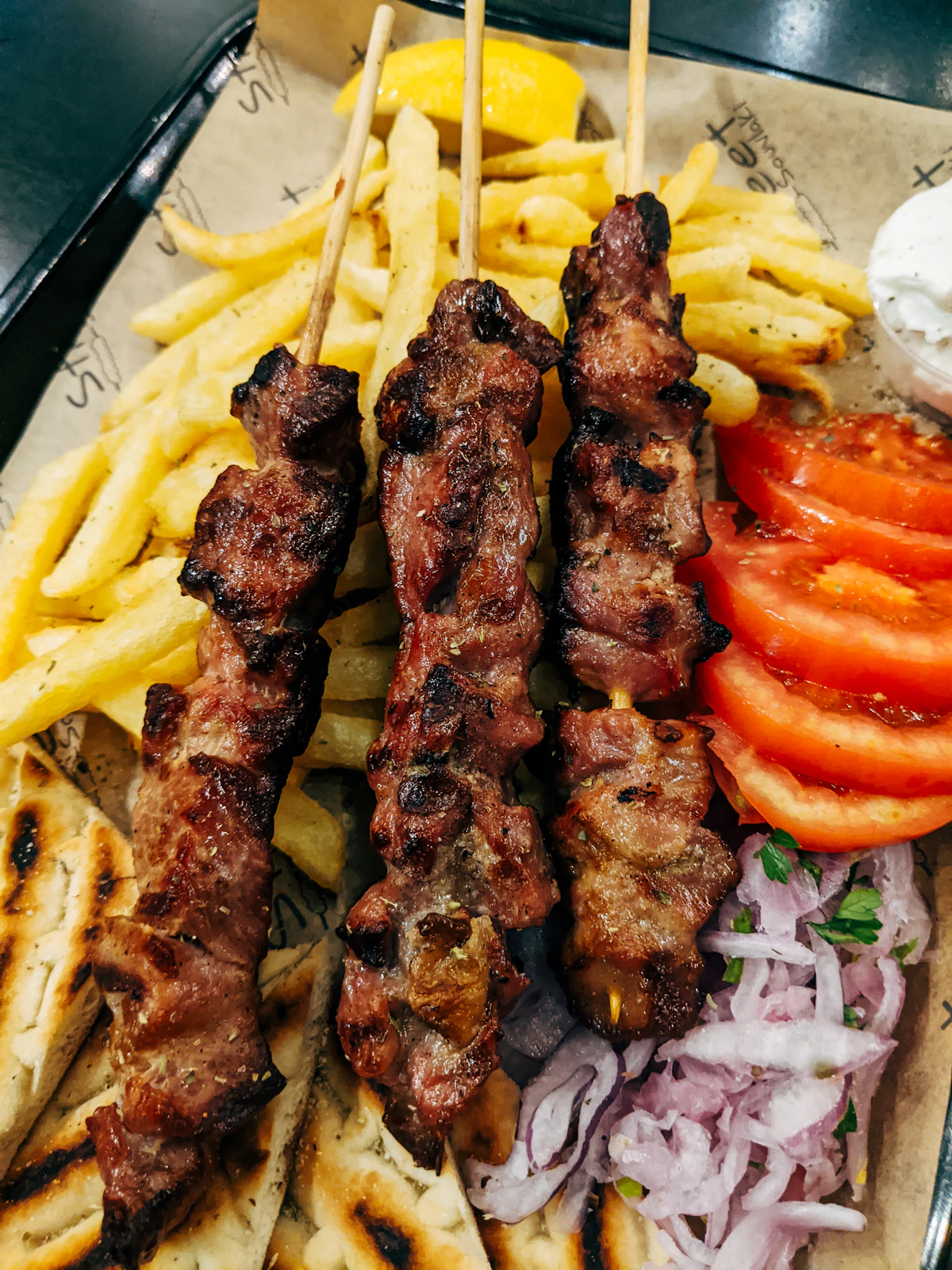
The kebab khas (AED 55) — yogurt-marinated barbecued chicken with a golden char from the grill — is the signature and one of the greatest dishes in Dubai at any price. The joojeh kebab (saffron-marinated chicken, AED 58) and the koobideh (minced lamb on skewers, AED 50) are equally extraordinary. Everything comes over buttered saffron rice that is as carefully executed as the meat. There is nowhere else in Dubai where you feel this directly connected to the city's pre-tourist, pre-skyscraper past.
Must-Order
Best Time to Visit
Lunch (12–3pm) for fresh kebabs. Evening for more atmosphere. Arrive early — it runs out fast.
Getting There
Near Al Mussallah, Deira (Al Hamriya area). Cash preferred. No reservations — queue and order at the counter.

Ravi Restaurant — Satwa
Ravi Restaurant is Dubai's most famous cheap eat — a Pakistani curry house in Satwa that has been feeding the city's South Asian community since 1978 (the same year as Al Ustad, coincidentally — something about 1978 and Dubai's enduring institutions). It's open 24 hours, the prices haven't changed significantly in decades, and the food is as good as it's ever been. The lamb karahi (AED 35) — a wok-cooked dry curry with tomatoes, green chillies, and ginger — is one of the great dishes of the city.
The ordering system is simple: point at the dishes in the bain-marie or order off the short menu. The daal makhani (AED 18) is slow-cooked for hours and arrives with warm naan and rice included. The chicken biryani (AED 28) is one of Dubai's most dependable versions. Eat here before or after any night out in the area and understand what Dubai was before it became a city of luxury hotels.
Must-Order
Best Time to Visit
Open 24 hours. Best at late lunch (2–4pm) for freshly replenished dishes. Great post-midnight.
Getting There
Al Diyafah Street, Satwa — a 2-minute walk from Al Mallah. Cash and card accepted.

Bu Qtair — Jumeirah Fishing Harbour
Bu Qtair is the crossover between seafood restaurant and street food experience — you point at fresh fish and shrimp in the glass cabinet, specify fried or grilled, and eat at plastic tables while the Arabian Gulf sits fifty metres away. Originally a beach shack serving fishing communities, it now operates from a modest building but has lost none of its spirit. The spiced fried shrimp (AED 55) and hamour fish are cooked simply in a ferocious turmeric-chilli marinade that defines what honest, direct cooking looks like.
Must-Order
Best Time to Visit
Weekday lunch (12–2pm) for no queue. Weekend evenings have 45-min waits — worth it.
Getting There
Near Jumeirah Fishing Harbour, Beach Road. Cash-friendly, no reservations, no delivery.
The Best Street Food by Neighbourhood
Satwa
Dubai's street food capital: Al Mallah (shawarma), Ravi (Pakistani), Al Safadi (Lebanese), Iranian bakeries
Deira & Old Dubai
Al Ustad (Persian kebabs), Deira fish market stalls, Gold Souk samosas, Sri Lankan rice and curry
Karama
South Indian dosa, Filipino BBQ and lechon, Sri Lankan curry houses, Bangladeshi biryani
Bur Dubai
Emirati luqaimat (near Dubai Museum), Indian chaats, Irani chai houses, Yemeni bint al sahn
Essential Dubai Street Food to Know
- Shawarma — The great leveller. Spiced rotisserie meat (chicken or lamb) wrapped in flatbread with garlic sauce and pickles. Best at Al Mallah or any Satwa/Deira street stand. AED 12–20.
- Luqaimat — Emirati fried dough balls drizzled with date syrup and sesame. Available at traditional Emirati restaurants and Old Dubai food carts. AED 15–25 for a portion.
- Samosa chaat — Crumbled samosa with chickpeas, yogurt, tamarind chutney. Found in Indian restaurants in Deira and Karama. AED 15–25.
- Harees — Traditional Emirati slow-cooked wheat and meat porridge. Available at Al Fanar, Logma, and during Ramadan at hotel Iftar spreads. AED 30–45.
- Manakish — Lebanese flatbread topped with za'atar (thyme-olive oil) or cheese, baked fresh on a saj. Available at Lebanese bakeries citywide from AED 8–15.
- Biryani — Dubai's most democratic dish. Pakistani, Indian, Hyderabadi, Malabar versions all available under AED 30. Ravi, Asha's, and Zafran are reliable.
Frequently Asked Questions
Where is the best shawarma in Dubai?
Al Mallah in Satwa is Dubai's gold standard — the chicken version (AED 17) with toum and pickled turnip is near-perfect. Al Safadi on Al Diyafah Street is the runner-up. For the best value, the shawarma stands near Deira Fish Market offer equally good quality for AED 12–15 per wrap.
What is the cheapest good meal in Dubai?
Ravi Restaurant in Satwa is Dubai's greatest cheap eat — Pakistani curries, biryani, and parathas from AED 15–40 per dish including rice and bread. Falafel wraps at Al Mallah (AED 13) and dosa at South Indian restaurants in Karama (AED 15–20) are equally extraordinary value.
Is street food safe to eat in Dubai?
Yes — Dubai's food safety regulations are strict and well-enforced. Even informal street stalls must meet the Dubai Municipality's hygiene standards. The legendary venues in Satwa and Deira (Al Mallah, Ravi, Al Ustad) have all been operating for decades with unblemished safety records. Eat freely and enjoy.


