There is a moment — if you've eaten at Ravi Restaurant in Al Satwa at midnight — where a karahi arrives at your table still popping and hissing from the iron wok, perfuming the whole room with the smell of ginger and green chilli hitting hot metal, and you understand something fundamental about Pakistani cooking. This is not a sauce dish. This is high heat, iron, fire, and skill.
Karahi is the dish that every Pakistani cook learns first and spends a lifetime perfecting. It's simple — chicken or mutton, tomatoes, ginger, green chillies, coriander — but the simplicity is deceptive. The timing matters. The heat matters. The quality of the tomatoes matters. Which is why the best karahi in Dubai comes from restaurants that have been making it for decades and have learned exactly what that dish needs. This guide covers everything: the different styles, where to find the finest karahi in Dubai, how to order it, and how to eat it correctly.
The Six Styles of Karahi in Dubai
Karahi is not a single dish — it's a family of dishes unified by the cooking method (high heat in a wok-style vessel) but varying enormously in style and regional origin.
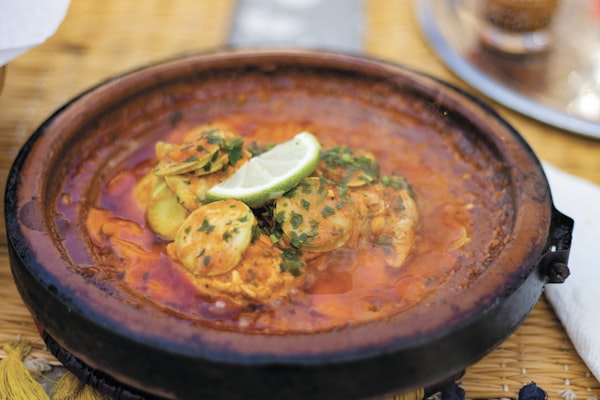
Chicken Karahi
The most widely eaten karahi in Dubai. Bone-in chicken pieces (for flavour) cooked in a minimal sauce of tomatoes, ginger, green chillies, and whole spices. Made to order, served sizzling. At Ravi Restaurant, this is the AED 55 dish that ruins all other karahi for you forever.
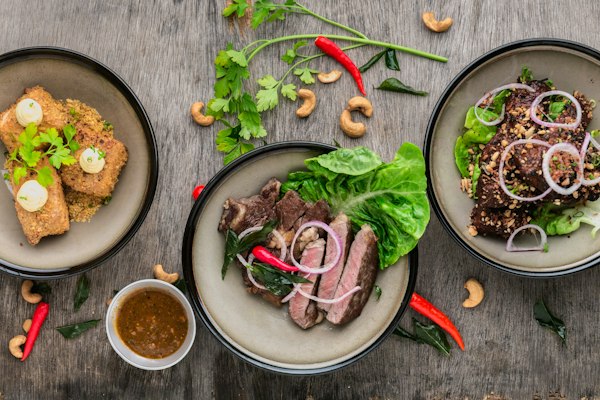
Mutton Karahi
The connoisseur's choice. Bone-in goat (mutton in the Pakistani sense means goat) takes longer to cook than chicken but the result is dramatically richer. The bone marrow releases into the sauce and the meat falls with a texture that is deeply, almost embarrassingly satisfying. Ask any Pakistani food expert — mutton karahi is the superior dish.
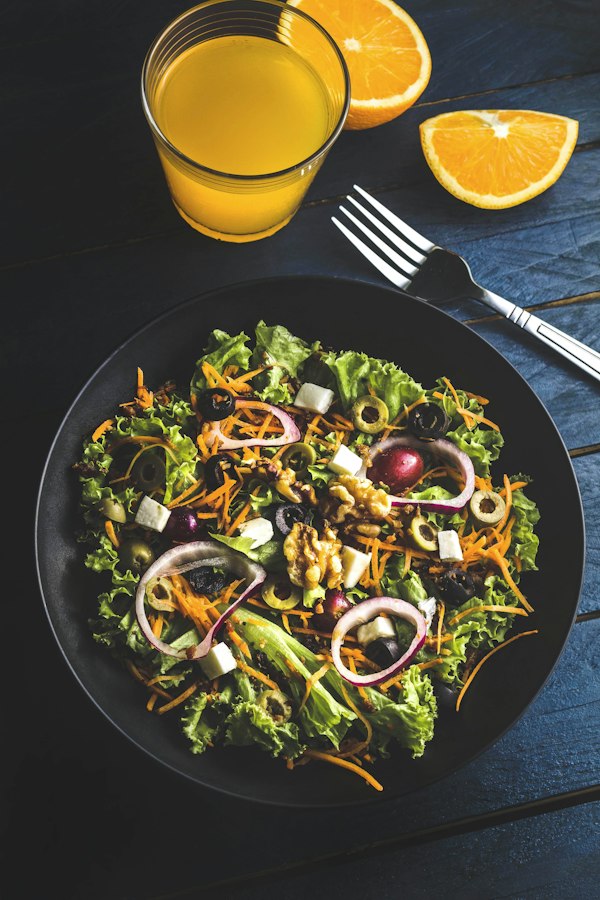
White Karahi (Lahori Style)
A revelation for those expecting the tomato-red standard. Lahori white karahi uses yogurt instead of tomatoes as the base — the result is creamy, milder, and extraordinarily fragrant. Lahori Chaska in Al Karama does a version that genuinely captures the dish's Lahori origins. A less commonly found but essential karahi experience.

Shinwari Karahi
From Peshawar and the Afghan border — the most minimal karahi style. Shinwari uses barely any tomato and almost no spices beyond salt, ginger, and green chilli. The result is pure: the meat's own flavour dominates. Made exclusively from fat-tailed sheep, which makes it richer and more unctuous. A few Peshwari restaurants in Deira offer versions of this.
Kata Kat Karahi
Named for the rhythmic sound of the cleaver chopping on the iron griddle. Kata kat is made from lamb or goat offal — kidney, liver, brain, heart — cooked at furious speed on a flat tawa. Deeply savoury, intensely spiced, and not for the faint-hearted. Lahori Chaska in Al Karama is the address in Dubai for authentic kata kat.

Karahi Gosht (Slow Braised)
A karahi that starts on high heat but finishes slowly — lamb shanks or beef cooked for hours until the meat falls from the bone and the sauce reduces to a deeply concentrated glaze. Bukhara at Mövenpick does a refined version. A more restaurant-style karahi, but deeply satisfying on a cooler Dubai evening.
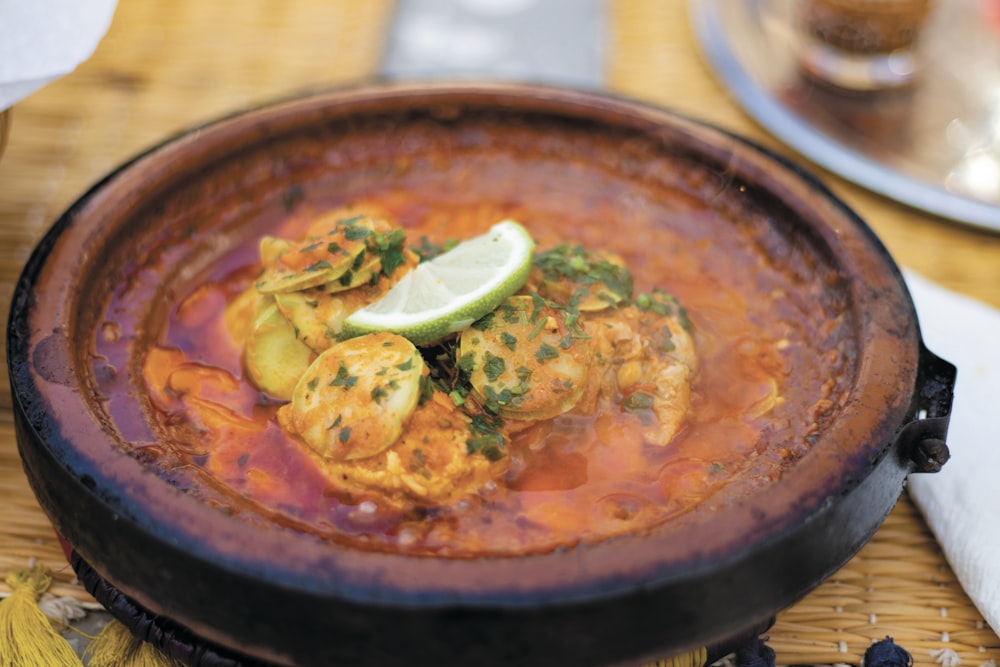
A karahi arriving at the table — still hissing and steaming from the iron wok. This is the correct moment to start tearing naan.
Where to Find the Best Karahi in Dubai
These five restaurants are the definitive karahi destinations in Dubai — each with a distinct style and character.
Ravi Restaurant
The benchmark. Ravi's chicken karahi has been the gold standard in Dubai since 1978. Order the full karahi (serves 2–3), eat it with the freshest naan in Dubai, and do it after midnight when the atmosphere is at its most electric.
AED 45–75 per karahiKarachi Darbar
The most reliable everyday karahi in Dubai. Karachi Darbar's chicken and mutton karahis are consistently excellent and the restaurant is family-friendly and open late. The Al Karama branch is the most atmospheric.
AED 55–95 per karahiLahori Chaska
The place for white karahi, kata kat, and deep Lahori food culture. Lahori Chaska does the white karahi with yogurt base that you almost never find in Dubai. The kata kat is the other unmissable order.
AED 50–85 per karahiBukhara
The upscale version. Bukhara's karahi gosht is a refined interpretation — slow-braised, beautifully presented, and excellent for a special occasion dinner. The quality of the lamb is noticeably better than at canteen-level.
AED 90–140 per portionPak Liyari
Famous for its seafood karahi — a version made with prawn or fish instead of meat, in the coastal Karachi style. Unusual in Dubai and genuinely excellent. The masala fish karahi is the order here.
AED 60–100 per karahiThe Karahi Ordering Guide
Ordering karahi at a traditional Pakistani restaurant involves a few decisions. Here's how to navigate them correctly.
| Decision | Options | Our Recommendation |
|---|---|---|
| Meat | Chicken, Mutton (goat), Beef, Prawn | Chicken for your first time; mutton for depth |
| Size | Full (2–3 people), Half, Individual | Full karahi — the cooking improves with quantity |
| Heat level | Regular, Extra chilli, Mild | Regular — Pakistani regular is already lively |
| Bread | Tandoori naan, Paratha, Roti, Puri | Tandoori naan at Ravi — the bread is extraordinary |
| Drink | Lassi (salted/mango), Rooh Afza, Chai, Water | Salted lassi — cuts through the richness perfectly |
| Sides | Raita, Pickles, Sliced onions, Green chutney | Raita and green chutney both — essential |
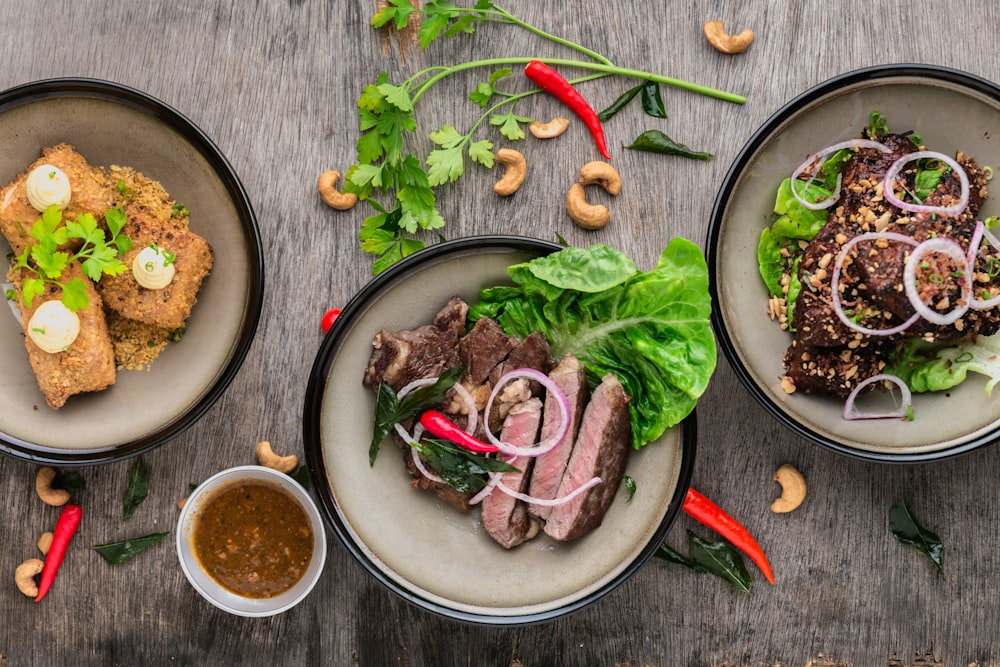
The correct way to eat karahi — tear the naan, scoop directly from the karahi, eat immediately while it sizzles
🗺 The Al Satwa–Al Karama Karahi Trail
This is Dubai's greatest one-evening food crawl for karahi obsessives — three stops, three styles, unforgettable.
-
1
Ravi Restaurant, Al Satwa — Chicken Karahi (Classic) Start here at 8pm. Order the full chicken karahi with tandoori naan. This is the benchmark. AED 55–65.
-
2
Lahori Chaska, Al Karama — White Karahi (Lahori) Drive 10 minutes to Al Karama. Order a small white karahi to contrast with the red. Experience the yogurt-base difference. AED 55.
-
3
Karachi Darbar, Al Karama — Mutton Karahi (Benchmark) Finish with a mutton karahi to compare bone-in goat against the earlier chicken. Order the masala chai to finish. AED 75–90.
How to Eat Karahi: A Quick Guide
Karahi is a communal dish. At traditional Pakistani restaurants there are no individual plates — the karahi arrives at the table and everyone eats from it directly, using torn pieces of naan as scoop and utensil. Here are the rules: tear off a piece of naan about the size of your palm; fold it into a scoop; use it to pull up a piece of meat and some sauce; eat it in one motion before the sauce drips. Add a small spoonful of raita if the heat is building. Repeat until the karahi is empty. Order another.
The bones are important — they are not discarded. Suck the marrow from the lamb or chicken bones. This is not considered impolite; it is considered sensible. The marrow is the richest part. A salted lassi alongside regulates the heat and refreshes between bites.
Karahi in Dubai: FAQs
What is karahi?
Karahi is a Pakistani dish cooked in a wok-style iron pan. The most common version is chicken or mutton pieces cooked over high heat with tomatoes, ginger, green chillies, and coriander. It is made to order and served sizzling in the cooking vessel.
What is the best karahi in Dubai?
Ravi Restaurant in Al Satwa serves what many consider the best karahi in Dubai — possibly in the world outside of Pakistan. The chicken karahi at Ravi is the gold standard. Karachi Darbar across multiple branches is the most reliable everyday option.
What is the difference between chicken karahi and mutton karahi?
Chicken karahi uses bone-in chicken and cooks faster — lighter, more delicate. Mutton karahi uses bone-in goat and takes longer — richer, deeper, more intensely flavoured. Most Pakistani food experts prefer mutton karahi but chicken karahi is the more popular order.
How much does karahi cost in Dubai?
At Ravi and similar canteen-style restaurants, a full karahi serving 2–3 people costs AED 45–85. At mid-range spots like Karachi Darbar, expect AED 65–120. Upscale versions at Bukhara run AED 90–140 per person.
How do you eat karahi?
Tear naan and use it to scoop meat and sauce directly from the shared karahi. No plates at traditional restaurants. Raita cools the heat. Salted lassi is the essential drink pairing. Suck the bone marrow — it's the best part.