The word "brunch" doesn't quite capture what happens at a good Yemeni restaurant on a Friday morning in Dubai's Deira. It's something older and more substantial — a tradition of extended morning eating that flows from breakfast into a midday feast, punctuated by glasses of qishr coffee and plates arriving until everyone at the table signals enough with a contented silence. It's not a meal with a fixed end time. It ends when it ends.
Yemeni breakfast culture is one of the most distinctive in the Arab world, and the restaurants in Dubai that do it well are among the most rewarding dining experiences in the city — and almost exclusively found far from the waterfront hotel scene that dominates most visitors' restaurant awareness.
The Yemeni Breakfast: What a Proper Spread Looks Like
A full Yemeni breakfast spread typically features several elements arriving together or in quick succession — it's designed to be shared, picked at, and returned to over a long sitting. Here's what to expect and order:
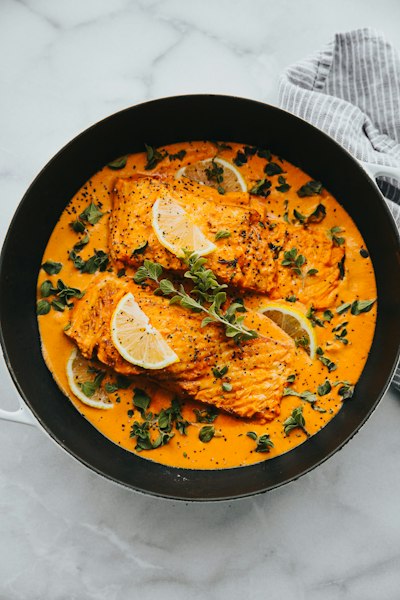
Lahoh with Honey & Ghee
Spongy fermented flatbread drizzled with raw honey and warm clarified butter — the cornerstone of any Yemeni breakfast
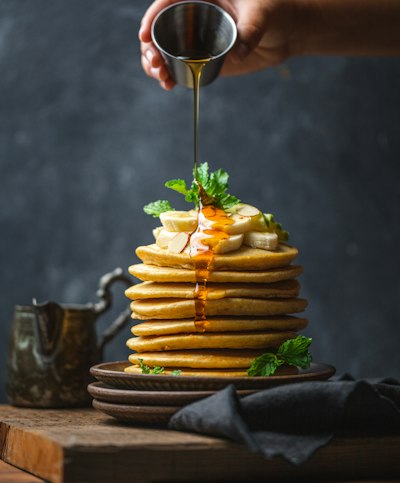
Mulawah
Flaky, buttery layered bread — richer and more indulgent than lahoh, similar in spirit to a very thin, crispy paratha. Also served with honey
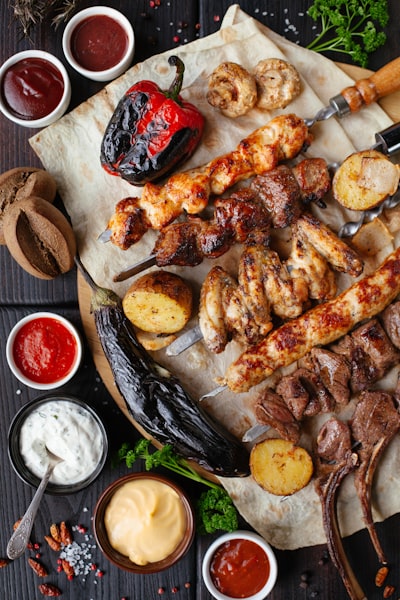
Asida with Ghee
Thick smooth flour porridge with a crater of warm ghee in the centre — simple, deeply comforting, and extraordinarily filling
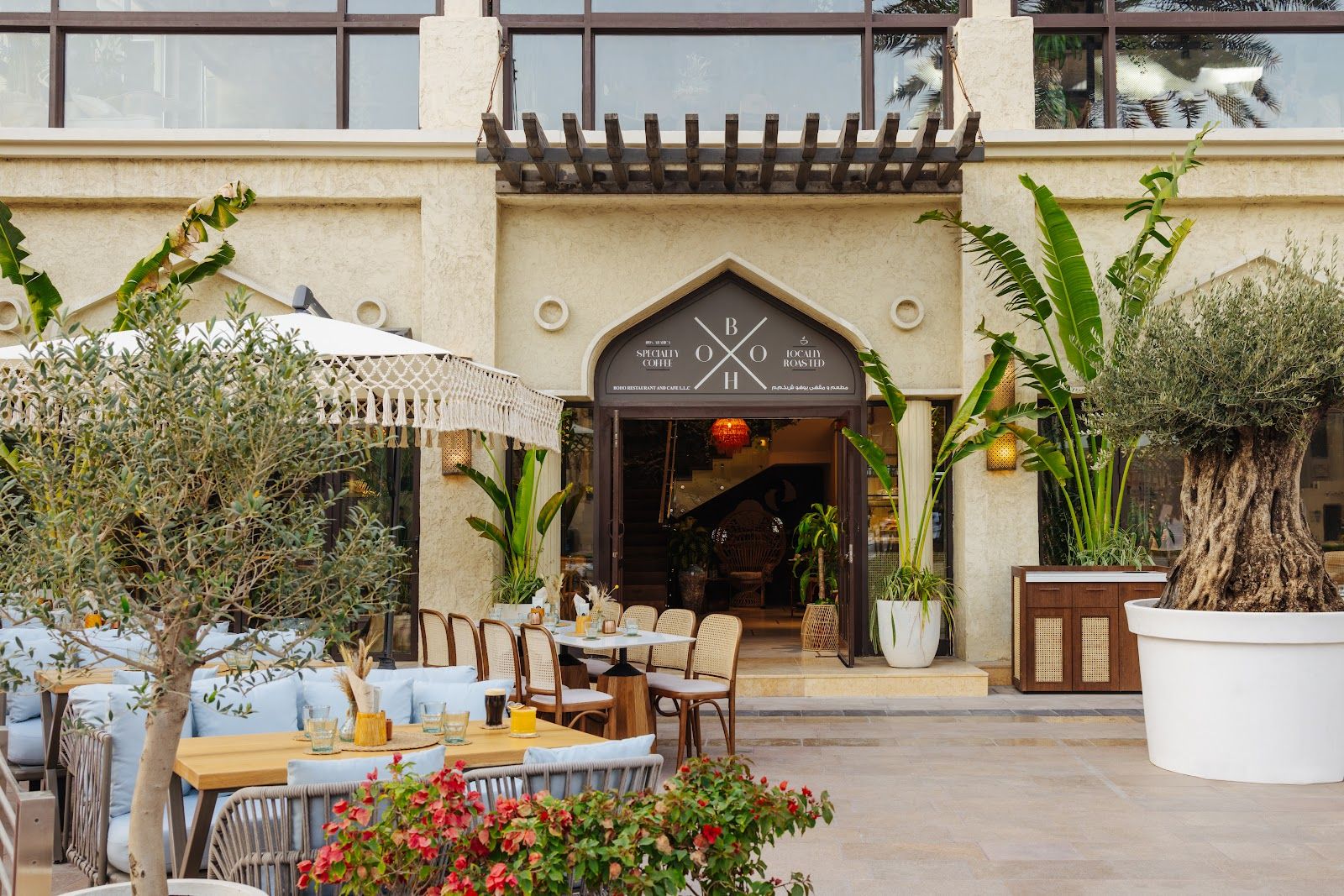
Bayd bil Tabaq (Scrambled Eggs)
Yemeni-style scrambled eggs with tomatoes, green chilli, and fresh coriander — lighter than shakshuka, faster, and just as satisfying
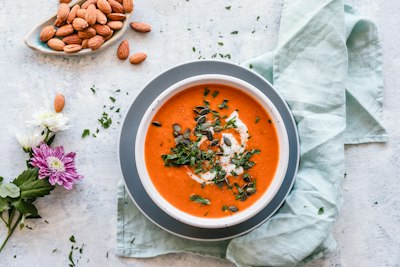
Fuul (Fava Beans)
Slow-cooked fava beans with olive oil, cumin, and lemon — the pan-Arab breakfast staple that Yemeni kitchens do particularly well with a hawayij spice lift
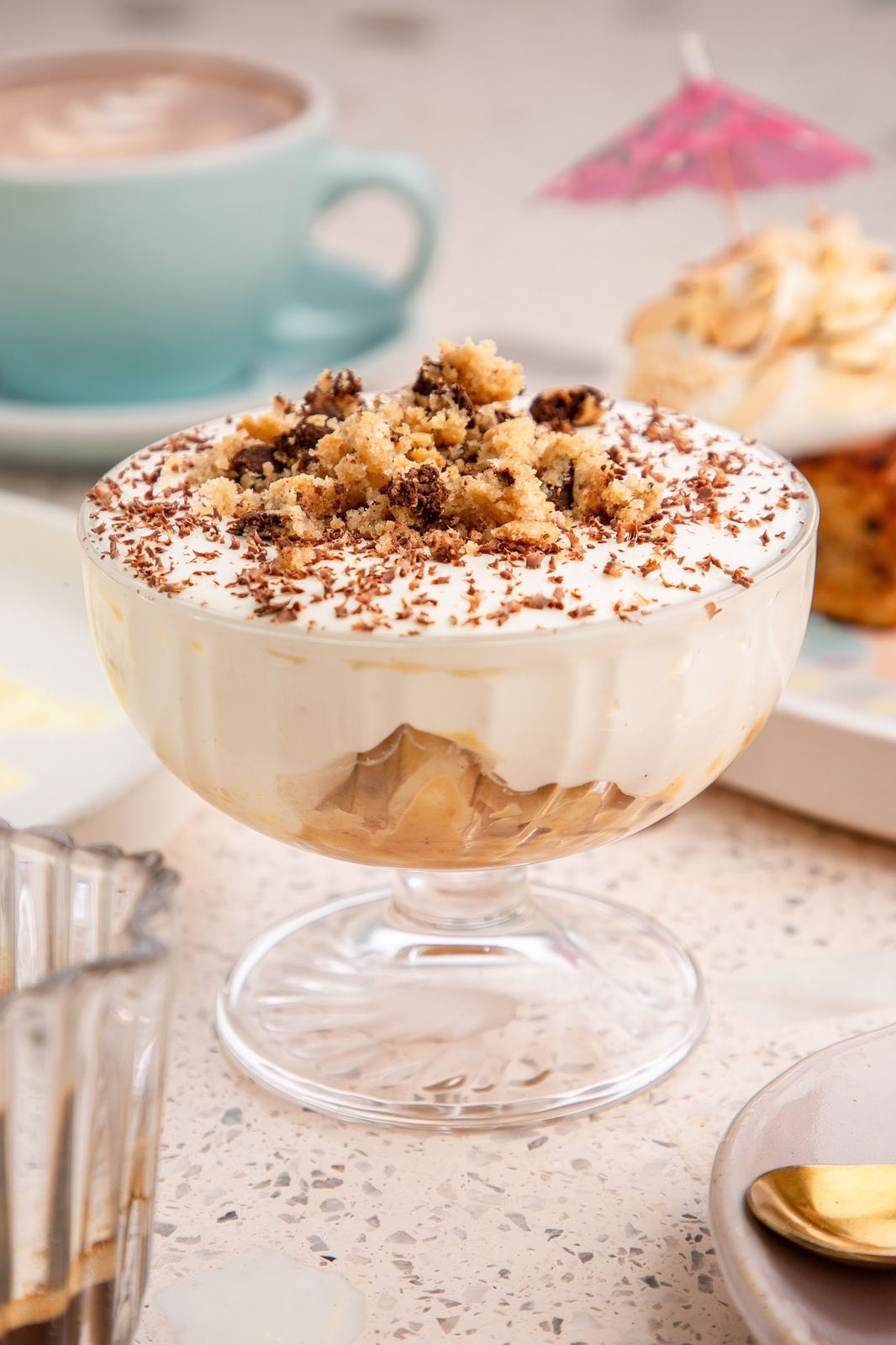
Bint Al-Sahn
Yemen's iconic layered honey cake — the sweet finish to any Yemeni brunch. Warm flaky dough drizzled generously with raw honey and black sesame
The Yemeni brunch order of play: Start with lahoh, honey, and ghee alongside a glass of qishr spiced coffee. Add fuul and scrambled eggs. Order asida if you want something hearty. Finish without question with bint al-sahn, drizzled honey, and another glass of qishr. This is the pattern that Yemeni families follow on a Friday morning, and it's near-perfect.
The Friday Mandi Feast: Yemeni Brunch at Its Fullest
In Yemeni culture, Friday — the equivalent of the Western Sunday in terms of family leisure time — is the day for the biggest communal meal of the week. In Dubai's Deira restaurants, Friday midday is when the mandi pits are working hardest, the dining rooms are fullest, and the experience is at its most atmospheric.
A Yemeni Friday feast typically begins with the breakfast spread described above, transitions naturally into a full mandi or haneeth lunch, and continues as long as the company lasts. It's a meal designed to take two to three hours, not thirty minutes. The portions are sized accordingly — whole legs of lamb, platters of rice big enough for six, towers of bread on each table.
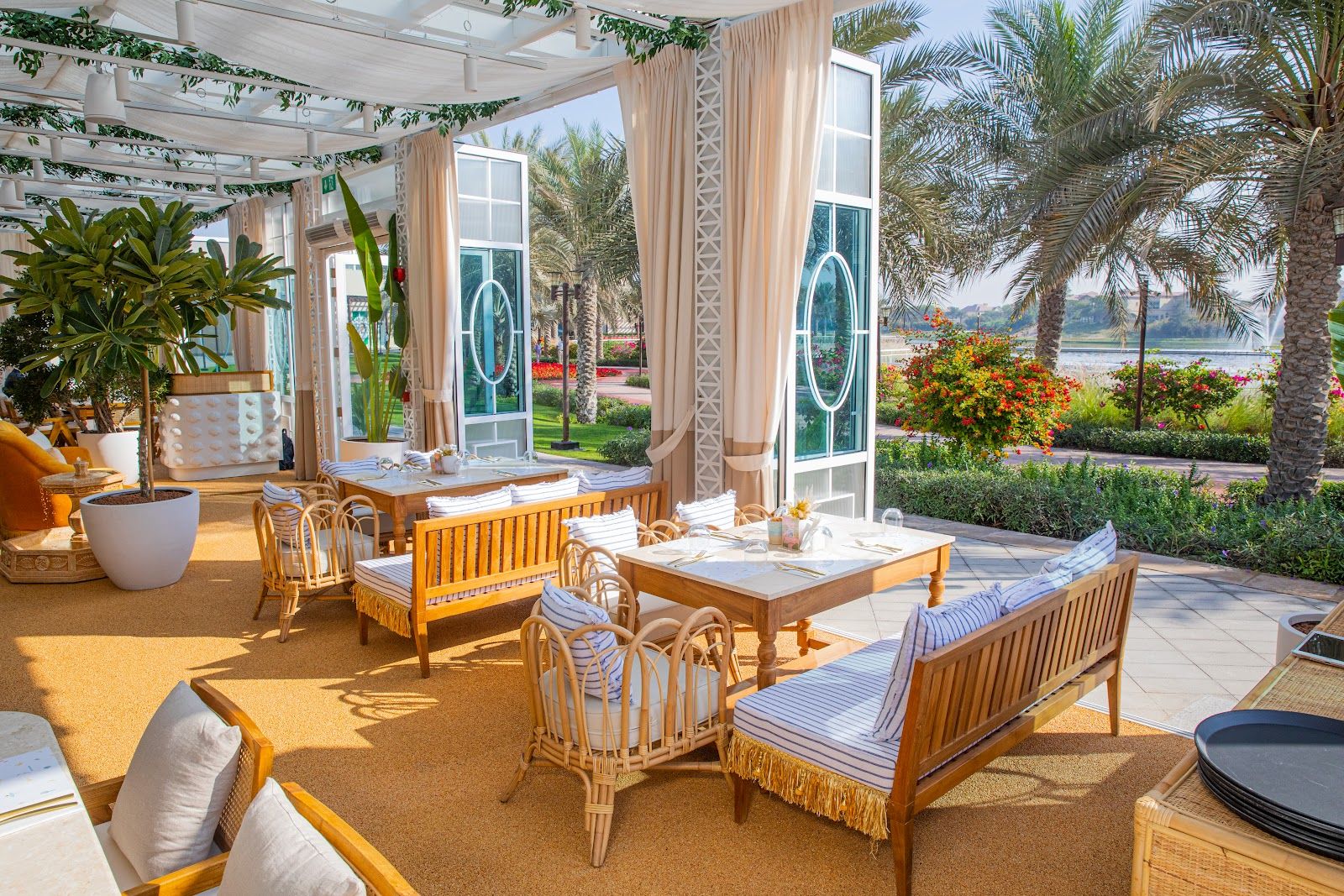
Best Places for Yemeni Brunch in Dubai
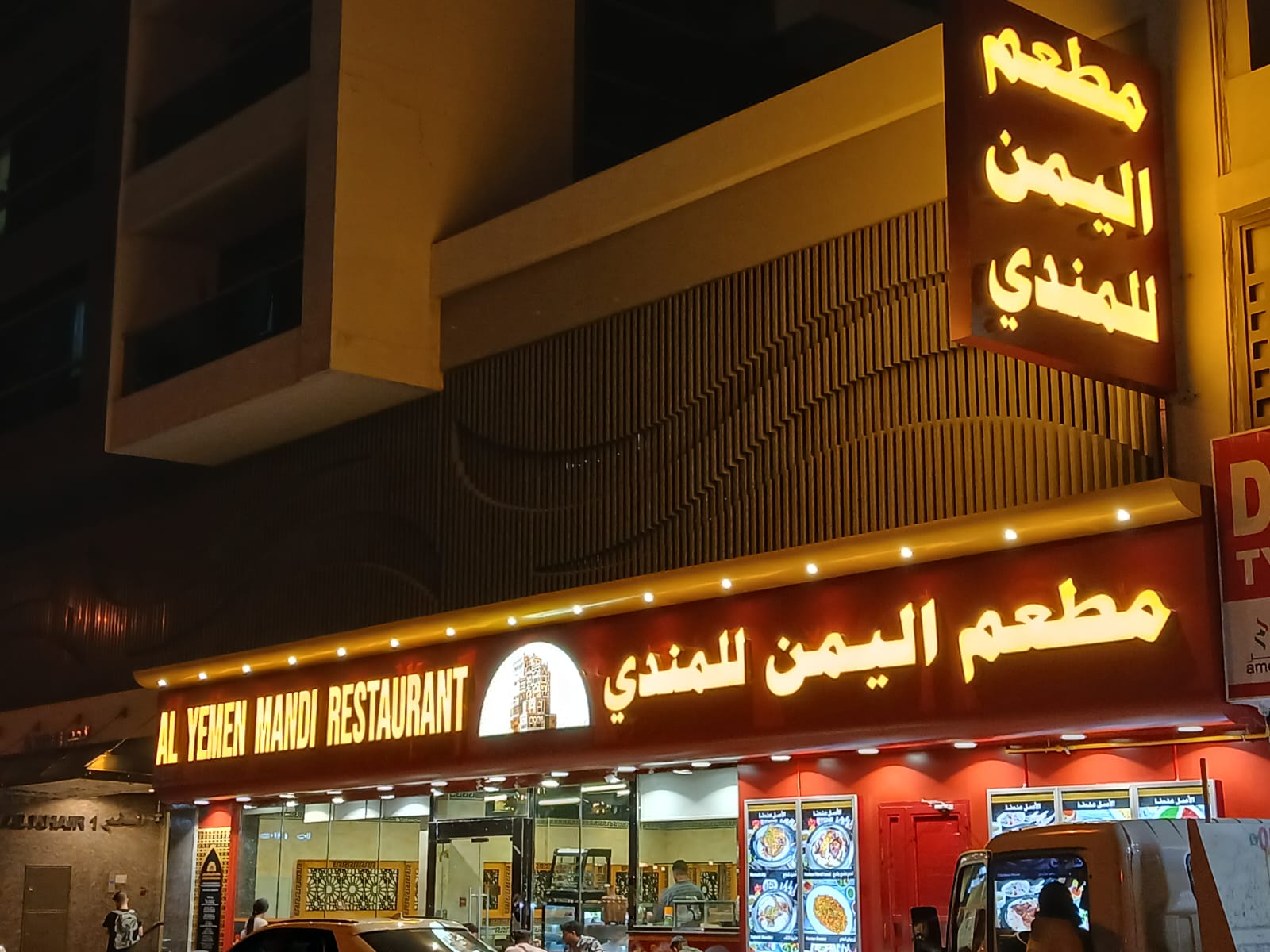
Aroos Al Yemen
The best traditional Yemeni breakfast in Dubai. Aroos Al Yemen is a neighbourhood institution in Al Qusais that serves the full morning spread as it should be — lahoh soft from the griddle, mulawah flaky and buttered, asida gleaming with fresh ghee, and bint al-sahn at the end drizzled with the best local honey. The qishr is exceptional. The dining room is simple, the tables are shared, and by 9am on a Friday morning it's packed with Yemeni families doing exactly what they've done here for years.
Lahoh
The best in the city — spongy, fermented, perfect
Bint Al-Sahn
Warm honey cake — order this no matter what
Qishr Coffee
Spiced husk coffee — the real Yemeni brew
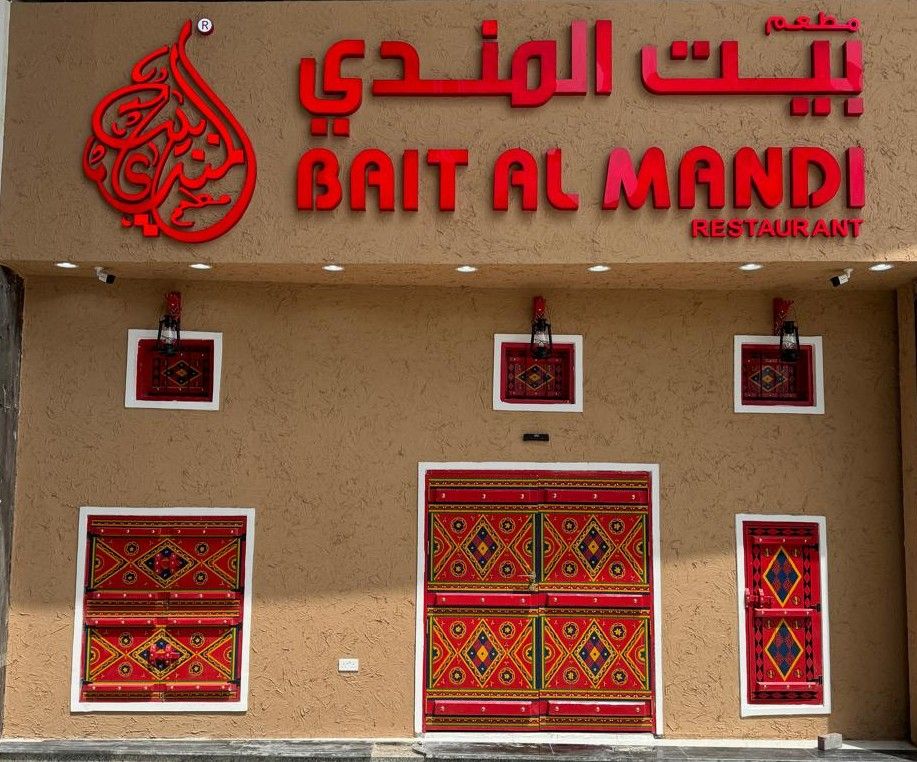
Bait Al Mandi — Friday Feast
If Aroos is the destination for morning, Bait Al Mandi is where you come for the midday Friday feast. The lamb mandi on Fridays is cooked from early morning, the rice absorbing hours of smoke and dripping fat, and the result at noon is the best version of the dish you'll find on any day of the week. The dining room fills fast — arrive by 12:15 if you want to guarantee a table without waiting.
Friday Lamb Mandi
Best version of the week — cooked from 6am
Mandi Rice
Fragrant, smoky — the platonic ideal
Maraq Broth
Free with mandi, absolutely worth drinking
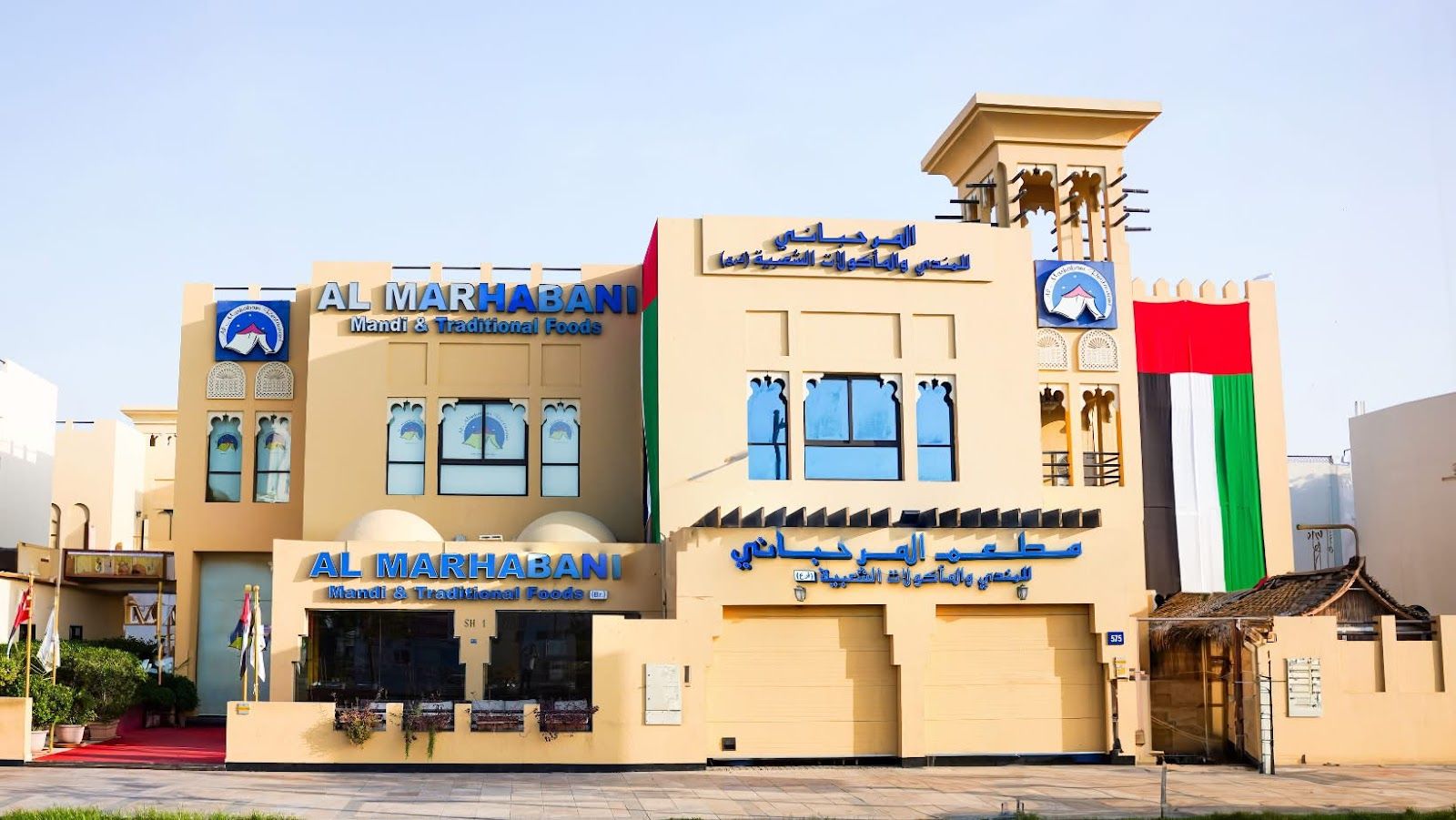
Al Marhabani Mandi — Weekend Brunch
Al Marhabani's weekend brunch is the Jumeirah option for guests who want the full Yemeni spread in a more comfortable environment. The restaurant opens from 10am on Fridays with a full breakfast menu — lahoh, mulawah, asida, eggs, fuul — before transitioning to the mandi and haneeth menu from midday. It's an excellent introduction for first-timers and comfortable enough to bring guests unfamiliar with Yemeni food.
| Time | What's Served | Price Range |
|---|---|---|
| 10am–12pm | Yemeni breakfast spread (lahoh, asida, eggs, fuul) | AED 35–60 pp |
| 12pm–4pm | Full mandi, haneeth, kabsa menu + starters | AED 60–130 pp |
| All day | Fresh juices, qishr coffee, bint al-sahn | AED 10–25 |
Yemeni Coffee: The Essential Brunch Drink
No Yemeni brunch is complete without qishr — a drink made from the dried husks of the coffee cherry, steeped with ginger and cardamom into a golden, warming cup. Yemen is the birthplace of the global coffee trade, and qishr predates what we now think of as coffee by centuries. It's lighter than espresso, more fragrant, with a gentle spice warmth that makes it one of the great breakfast drinks in the world.
In Dubai's Yemeni restaurants, qishr is typically served in small glasses or ceramic cups. It pairs perfectly with lahoh and honey, with bint al-sahn, or simply drunk on its own between dishes. At Aroos Al Yemen in Al Qusais, the qishr is made with fresh ginger and the proportion of cardamom is exactly right. It's worth going for the qishr alone.
Yemeni Brunch During Ramadan
During Ramadan, Yemeni brunch culture transforms for iftar — the breaking of the fast at sunset. Dubai's Yemeni restaurants are among the best places in the city to experience iftar, with a format that begins with dates and cold water, followed immediately by maraq broth, then the full mandi spread. The atmosphere on Ramadan evenings in Deira's Yemeni restaurants — lit with lanterns, packed with families, the sound of communal prayer followed by the clatter of shared feasting — is genuinely unlike anywhere else in Dubai.
Related Guides